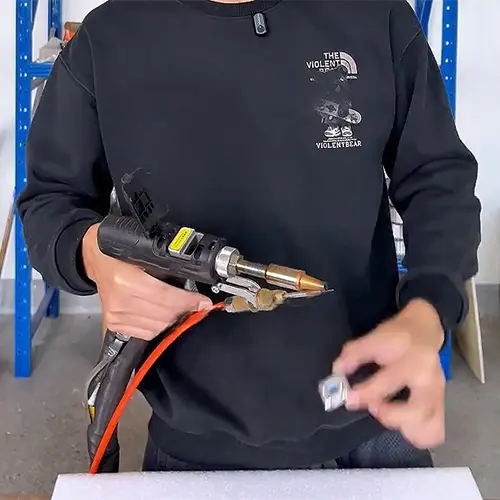
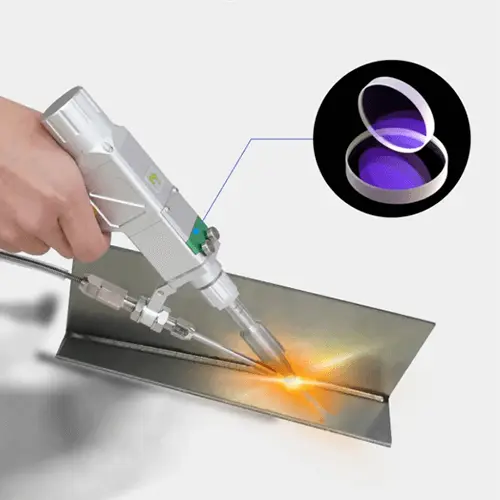
Laser Welding Knowledge Base
Welcome to the Kaihuan Laser learning center. This is a working handbook written by the people who build the machines — for fabricators who run them every day. You will find four kinds of material here: safety rules that protect your eyes and your shop, maintenance guides that keep your lens and laser source alive, parameter knowledge so you stop guessing at settings, and honest comparisons that tell you whether a 1500W, 2000W, or 3000W handheld laser welder actually fits the work on your bench.
Nothing here is polished marketing copy. It is the same guidance we give customers on WhatsApp, written down once so you can find it at 2 a.m. when a weld is going wrong.
Safety & Operation
Start here if you are new to laser welding, or before you let a new operator near the machine.
- Handheld Laser Welder Safety: The Honest Guide — What actually causes eye injuries, why a standard welding mask is not enough, and the four interlocks you should never bypass.
- Laser Welding Machine Safety Precautions: 6 Rules Every Operator Must Know — A one-page ruleset you can pin to the workshop wall.
- How to Use the Laser Cleaning Mode — How to switch your 3-in-1 machine into rust and oxide removal, and where cleaning mode helps and where it does not.
Machine Care & Consumables
The lens is the part that fails first and costs the least to protect.
- How to Reduce Laser Welder Lens Damage — The three habits that shorten protective lens life, and the cheap routine that triples it.
- How to Replace the Protective Lens — Step-by-step swap without letting dust onto the focusing lens. Stock spare lenses before you need them.
Process & Parameters
If your welds are inconsistent, the problem is usually here — not in the machine.
- Laser Welding Duty Cycle and Pulse Frequency — What duty cycle really limits on a handheld unit, and how to pick pulse frequency for thin stainless without burning through.
- Causes and Solutions of Black Smoke in Handheld Laser Welding — Why stainless turns black, how shielding gas flow fixes most of it, and when the answer is wire feeding instead.
Buying Guides & Comparisons
Read these before you spend money, not after.
- Laser Welder vs MIG — Where laser wins outright (thin gauge, post-weld grinding) and where MIG still makes sense.
- Are Laser Welds Strong? Don’t Judge by the Bead — Why a narrow, clean seam can outperform a fat MIG bead, and what penetration depth actually means for strength.
Which Power Do You Need?
The fastest way to get a straight answer is to tell us two things: your material and your thickness. As a rough guide, 1500W covers most thin-gauge sheet work, 2000W is the all-rounder for fabrication shops, and 3000W handles thicker sections and higher duty cycles. See the detail on each machine — 1500W, 2000W, 3000W — or contact us with a photo of your workpiece and we will tell you which one to buy, even if the answer is “you do not need the bigger one.”
Frequently Asked Questions
Yes, with correct eyewear and the interlocks engaged. Start with our honest safety guide and the six-rule precautions list.
Almost always shielding gas flow or heat input. See causes and fixes for black smoke.
Depends on your environment and cleaning habits. Our lens damage guide explains what shortens lens life, and how to replace it when it is time.
Depends on your material thickness and how much post-weld grinding you can live with. The laser vs MIG comparison breaks it down honestly.