
Protective lenses are critical optical components in a handheld laser welding head. Their primary role is to shield the internal focusing lens from spatters, dust, and metal vapors. However, frequent lens damage is a common headache for operators, leading to higher costs and inconsistent welding quality.
By optimizing your operation and parameters, you can significantly extend the lifespan of your lenses. Here are six professional strategies based on industrial experience.
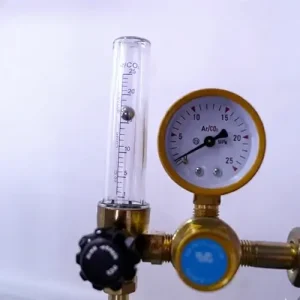
1. Increase Protective Gas Pressure and Flow
Ensuring adequate gas flow is your first line of defense against lens contamination.
- Recommended Flow: No less than 15 L/min.
- Recommended Pressure: Minimum 4 bar. If using Nitrogen, keep it above 0.2 MPa (2kg). A strong gas barrier effectively blows away plasma and metal spatter, preventing them from adhering to the lens surface and causing burn spots.
2. Maintain a 45° Welding Angle
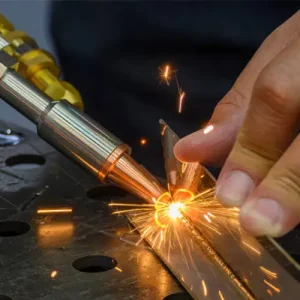
Avoid welding vertically (90°) to the workpiece. Instead, maintain a 45° tilt angle.
- Why it works: A 45° angle guides spatters away from the laser path.
- The Risk: Vertical welding allows molten metal to spray directly back into the torch, drastically increasing the risk of lens pitting and contamination.
3. Set Smart "Slow Rise & Fall" Parameters
Abruptly starting or stopping high-power lasers causes thermal shock and intensified splashing. You must configure a smooth energy transition:
- Light On/Off Delay: 200ms – 500ms.
- Start Power: Set to 20%.
- Progressive Time: 200ms – 300ms. Never set these parameters to 0. These settings ensure a stable power ramp-up, protecting the optical assembly from instant impact.
4. Special Care for Aluminum and Galvanized Steel
When welding high-reflectivity or volatile materials like aluminum and galvanized sheets, extra caution is needed.
- The Challenge: These materials create strong reflections and zinc vapors that can corrode the lens coating.
- Solution: Use the minimum effective power required for the task and enhance gas protection to minimize chemical and physical damage.
5. Control Output Power Levels
While high power increases efficiency, it also multiplies the thermal load and spatter impact on the lens.
- Best Practice: Avoid running at maximum power for extended periods if the task doesn’t require it. Optimizing your welding path and parameter combinations can achieve high quality while reducing stress on the optical system.
6. Always Use High-Quality Original Lenses
The material and coating process of the lens determine its durability. Poor-quality lenses have weak thermal shock resistance and are prone to coating peel-off or cracks.
Recommendation: Prioritize original manufacturer lenses. Although they may seem more expensive initially, their superior transmittance and fit will lower your long-term maintenance costs and prevent damage to the more expensive focusing mirrors.
Conclusion
Reducing protective lens loss requires a combination of correct gas management, proper operating angles, and scientific parameter settings. Establishing a routine inspection and cleaning schedule will ensure your Kaihuan Laser Welder runs at peak efficiency with the lowest possible consumable cost.