
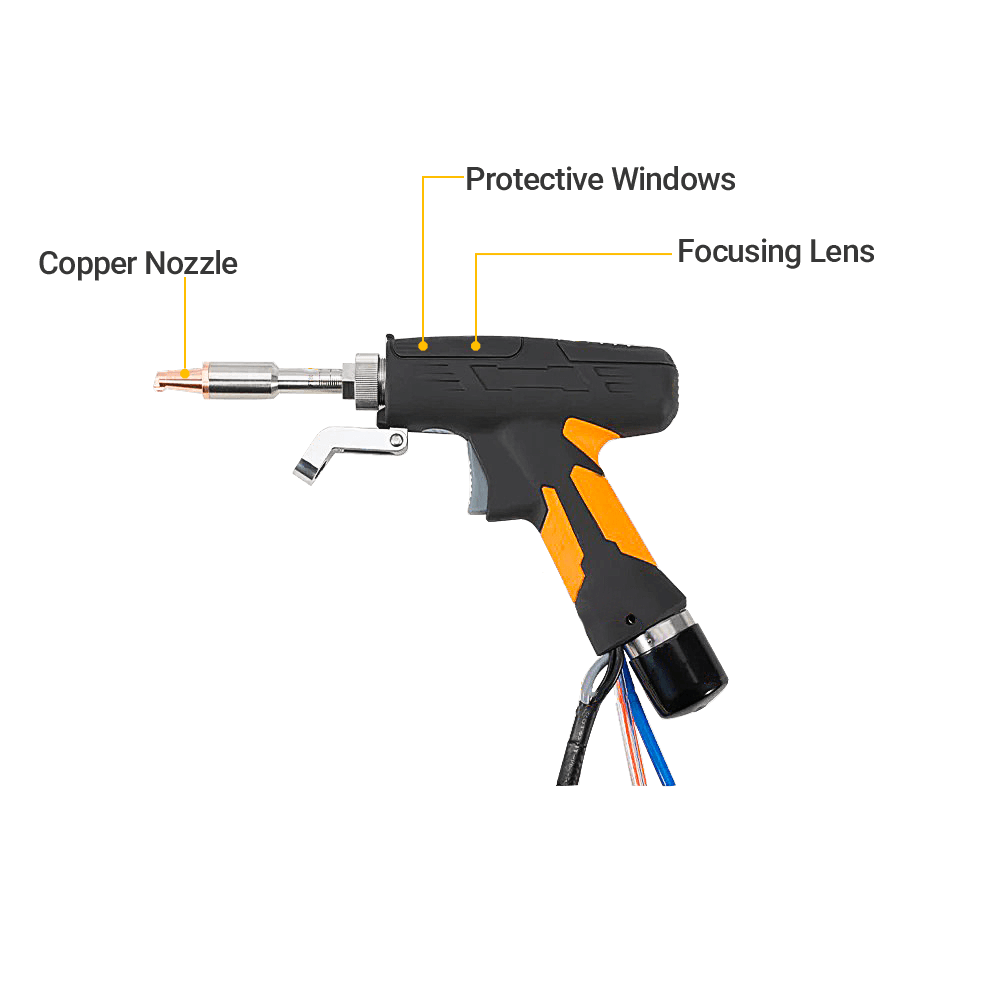
The protective lens is a critical optical component in handheld laser welding machines, directly bearing the impact of high-energy beams and metal spatters. While it is a consumable part, its lifespan depends heavily on the replacement process. Under standardized operation, a lens can last for many hours; however, poor handling can cause burn-ins, fogging, or scratches within minutes.
To optimize costs and ensure welding consistency, follow these four core operational standards.
Strict Hand Hygiene: Eliminating Oil and Particles
Before touching any components, you must thoroughly wash and dry your hands.
- The Risk: Residual oils, rust inhibitors, or metal debris from previous mechanical work can transfer to the lens.
- The Consequence: These contaminants cause localized heat accumulation during laser operation, leading to carbonization of the coating or permanent thermal damage.
- Pro Tip: Use lint-free cloths, isopropyl alcohol cleaners, and finger cots to create a barrier against human contamination.
Standardized Handling: Avoiding Surface Damage
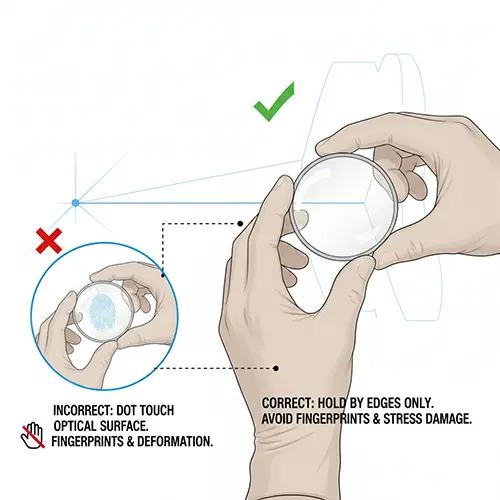
Never touch the optical surface or the center area of the lens.
- Proper Grip: Hold the lens only by its edges using clean fingers or powder-free gloves.
- Structural Integrity: Most protective lenses use fused silica or BK7 substrates and are only 0.5–1.0mm thick.
- Prevention: Direct pressure from fingers leaves organic residue and can cause micro-deformations or edge chipping that shortens the lens’s service cycle.
Dust-Free Environment Control: Model-Specific Management
Contamination risks increase by approximately 40% for every 30 seconds of exposure. Ideally, the internal cabin should maintain an ISO Class 5 (Class 100) cleanliness standard.
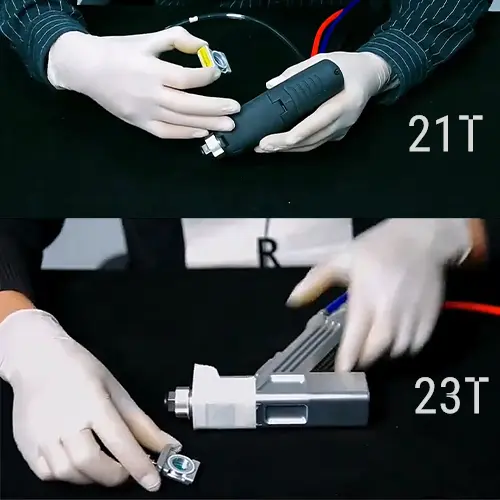
Management differs based on your Kaihuan Laser torch model:
- For 21T Models: These torches feature a sealable cover. You must reset and seal the cover immediately after removing the lens holder.
- For 23T Models: These use an open drawer structure. Use masking tape to completely cover the opening immediately after extraction to form a temporary pressure barrier.
Workspace Optimization: Minimizing Airborne Dust
The environment where you perform the replacement is just as important as the technique itself.
- Location: Ideally, perform replacements in a dedicated cleanroom.
- Field Protocol: If replacing on-site, turn off all surrounding ventilation and pause nearby grinding or cutting tasks.
- Proven Data: Research shows that lenses replaced in static air environments have an average lifespan 5.3 times longer than those replaced in areas with active airflow (such as near cooling fans). Ensure there is no significant air turbulence within a 2-meter radius of your workspace.
Conclusion: Turning Practice into "Muscle Memory"
The durability of your protective lens is less about the material itself and more about the precision of your maintenance routine. By integrating these four steps—Hand Hygiene, Standardized Handling, Environment Control, and Workspace Optimization—into your Standard Operating Procedures (SOP), you can significantly reduce operational costs and ensure the reliability of your laser welding process.
You Might Also Like

Laser Welder Focus Adjustment
The bead suddenly turns black and grey. Penetration drops. The sparks go from a steady, fine stream to something noisy