
A shop posted its new 1500-watt fiber laser welder to r/Welding. The thread hit 330 upvotes, and the poster was refreshingly blunt about what he’d found:
“Did a little bend test on some quarter and it worked alright, acid etched, and obviously the penetration isn’t incredible — but hey, for guards and non-structural stuff it’s a sweet little set up.”
The comments didn’t stay polite for long. They turned into the argument every buyer eventually runs into: one person’s machine cost about $5,000, another’s about $45,000 — and both were sold as “a 1500W fiber laser welder.”
That’s the question this guide answers: how to choose a laser welder when the price tags are ten times apart and the photos look identical.
We make laser welders. So when we tell you the price tag is the last thing you should look at, take it as something we’d rather teach than exploit. Here’s how to read a laser welder the way an engineer would — before you write the check.
If You've Ever Gotten Two Quotes and Wondered Why
If you’re like most shop owners, you’ve collected quotes that look identical on paper. Same wattage. Same “fiber laser welder” in the product title. Same stock photos, sometimes the same photo across three different sellers.
One quote is $5,000. Another is $45,000. The salesman can’t explain the difference in a way that makes sense, so you’re left guessing — and guessing wrong on a capital purchase is expensive.
Get it wrong and you pay twice. First for a machine that can’t hold penetration a month after it arrives. Then in downtime you can’t bill for, while the seller’s number goes quiet.
That’s not a hypothetical. It’s a pattern that shows up in the forum threads, in the repair shops, and in the frustrated emails from buyers who chased the low number and inherited a paperweight.
The good news is the difference isn’t a mystery. It’s three specific things, and once you know them, you can read any laser welder in about five minutes.
The Thread That Explains the Whole Market
That Reddit thread is worth reading because the people arguing in it are working fabricators and manufacturing consultants — the people who actually run these machines, not the people selling them.
The numbers they threw around were real and specific: a Gweike unit around $5,000, an xtool around $8,000, and a Miller — which runs an IPG power source — originally around $45,000 and now closer to $20,000. A new brand, Arc Captain, had just shipped one.
Same category. Ten times the price spread. And one commenter said the quiet part out loud: the difference comes down to the power source inside, and “basically there are three different drivers — IPG, Max Photonics, and other Chinese generics.”
That single line is the whole market in a sentence. Let’s unpack it.
Why the Price Tag Tells You Nothing
The most expensive component in any laser welder isn’t the gun, the chassis, or the display. It’s the resonator — the laser source that actually generates the beam.
Everything else is comparatively minor. Which is why the price of a machine is really the price of its power source, with a margin on top.
That’s also why two machines that look the same can cost wildly different amounts. Swap a generic resonator for a top-tier one and the price of the same frame can more than double. The badge on the outside didn’t change. The part doing the work did.
So when you see “$5,000 vs $45,000,” don’t ask “which is better.” Ask a sharper question: what’s inside, how is it controlled, and who answers when it breaks?
What Actually Drives the Price
The Power Source
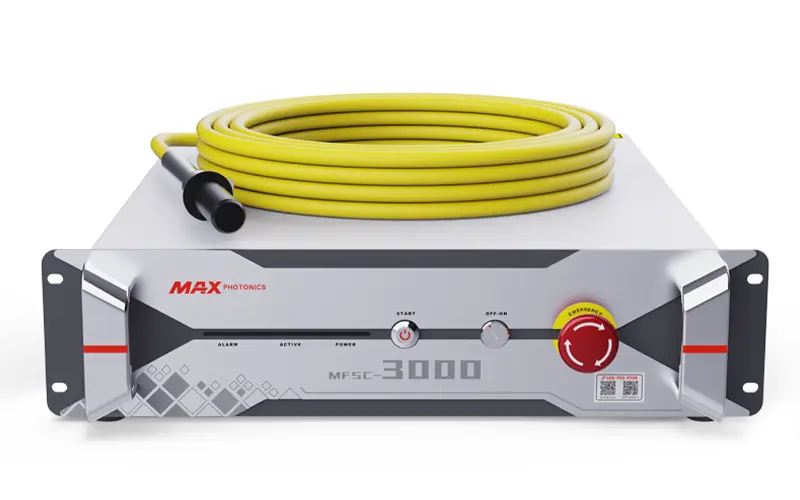
The thread split laser sources into three tiers, and it’s a useful mental model:
- Top-tier Western sources like IPG — the benchmark for stability and closed-loop control.
- China’s leading resonator makers, like Max Photonics — one fabricator called them “very close” to IPG.
- Generic sources — the no-name resonators that show up in the lowest-priced machines.
The practical differences are technical, not patriotic. A quality source holds a predictable power output across a shift; a generic one drifts as it heats up, ages, and responds to humidity. For welding, that drift shows up where you can’t afford it: in penetration you can’t see after the fact.
The Control System and Stability
Welding is less forgiving than cutting. A laser cutter’s job is obvious — the part either separates or it doesn’t. A weld can look fine on the surface and be shallow underneath, and you won’t know until it fails.
That’s why closed-loop power measurement matters. A good system constantly measures its own output and corrects for degradation — things like photodarkening of the fiber or a diode losing efficiency over time. A generic source without that feedback can’t compensate, so its power drifts and its penetration depth becomes a guess.
The practical test is simple: ask for a stability spec, and ask what happens to the power after a full production shift.
Support, Parts, and Service
This is where the thread gets honest in both directions. One fabricator’s 6kW resonator died and the Chinese supplier had a replacement in two weeks. Another shop’s brand-new premium machine sat dead for months waiting on a repair — broken fiber, then a broken connector, shipped back still unfixed.
Premium is no guarantee. One commenter said their IPG units “break all the time”; another said they run a Gweike hard without having to baby the cable.
The real question was never the flag on the machine. It’s response time, parts availability, and whether a human answers when it breaks. Ask for that answer in writing before you buy.
The Spec Nobody Asks About: Welding Mode
There’s one more spec that quietly decides whether a machine fits your work, and almost nobody asks about it.
Laser welding has two basic modes:
Heat conduction welding. A high focus position melts the surface, and heat conducts shallowly into the material. It produces a beautiful, cosmetic seam — the kind you’d want on a kitchen appliance — but it’s slower and limited to thinner material and simpler joints.
Keyhole welding. A deeper focus position bores a cavity of molten metal and vapor, driving the beam deep into the workpiece. It’s more flexible, penetrates far more, and it’s the mode most people should learn on — with the caveat that it demands proper joint fit-up, or better, a part designed with laser welding in mind.
Before you buy, ask the supplier which mode the machine is set for, and whether it can switch. A machine locked into one mode is a tool for one job, not a general-purpose welder.
Seven Questions to Ask Before You Buy
You don’t need to be an engineer to interrogate a supplier. These seven questions will tell you more than any spec sheet:
- Ask which resonator is inside — brand, model, and whether it’s documented in writing.
- Ask about closed-loop control — does the machine measure and correct its own power output?
- Ask for a stability spec — what happens to the power over a full shift of production?
- Ask the response time — when the machine goes down, is it hours or weeks before help?
- Ask about parts — are the lens, nozzle, cable, and resonator stocked, and how fast can they reach you?
- Ask what safety comes standard — interlocks, rated eyewear, and certifications (here’s what a proper setup looks like).
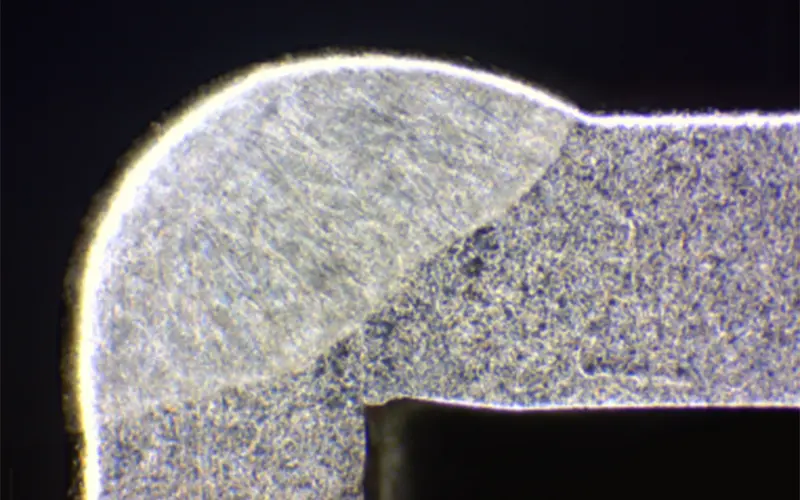
- Ask for a sample on your own material — with a cross-section, not just a photograph.
A supplier who answers all seven comfortably is a supplier worth the conversation. One who dodges the stability question or won’t cut a sample is telling you everything you need to know. And when a sample does land on your bench, here’s how to judge a laser weld once you cut into it.
Where a Less Expensive Machine Is Fine — and Where It Isn't
Honesty cuts both ways. You don’t always need the top-tier source.
For non-structural work — guards, covers, enclosures, cosmetic seams — a lower-priced machine is often exactly right. One commenter put it bluntly: for that kind of work, laser welders are “basically cheat codes.”
For structural or certified work, the calculus flips. (Still deciding whether laser welding belongs in your shop at all? That choice has its own guide.) The process has to be qualified, the power source can’t be a question mark, and — as the thread acknowledged — most certified weld inspectors are still hesitant to put their name on laser welding. That’s not the technology’s fault, but it is the reality you have to qualify against.
The honest rule: match the machine to the consequence of failure. If a failed weld means a scrapped guard, buy sensibly. If a failed weld means a structure, buy certainty.
FAQ
Still torn between two quotes? Here are the answers buyers look for most:
Prices span roughly $5,000 to $45,000 for the same nominal wattage, because the power source inside sets most of the price. The machine’s true cost also includes stability, parts, and support — which is why the sticker alone is a poor guide.
Match it to your consequence of failure. Top-tier sources hold power most predictably; leading Chinese resonators are close behind; generic sources trade stability for the lowest price. Verify with a stability spec and a sample, not a brand claim.
For non-structural work, often yes. The risk shows up where penetration consistency matters — which is why you test on your own material and ask for a cross-section before committing.
Reliability isn’t a flag, it’s a supplier. The same market produces two-week resonator replacements and machines that sit dead for months. Judge by response time, parts availability, and documented specs — not by country of origin.
Heat conduction melts the surface for a shallow, cosmetic seam. Keyhole welding bores deep for maximum penetration and flexibility. Ask which mode a machine is set for and whether it switches.
Not reliably unless the process is qualified and the power source is stable enough to hold penetration — and most certified inspectors still hesitate to certify laser welds regardless of machine price.
The price tag is the last thing you should look at. The resonator inside, the control system that keeps it stable, and the support behind it — those are the first three.
Ask the seven questions. Demand a sample on your own material, with the cross-section to prove it. Judge the supplier by the evidence they hand you, not the flag on the crate.
That’s how to choose a laser welder — the way you’d choose any tool that has to perform every day: by what it does under load, not by what the sticker says.
Want to put these questions to us on your own material? Tell us what you’re welding and we’ll run a free sample weld test and show you the cross-section — no obligation, just evidence.